Threshold bands
Multiple fusible links for a rough thermal timeline, not just a binary event.
Concept / field prototype 01
A disposable thermal-trigger marker that turns an escaping prescribed burn into a visible, timestamped event.
Designed as a research concept — never a replacement for active fire watch.
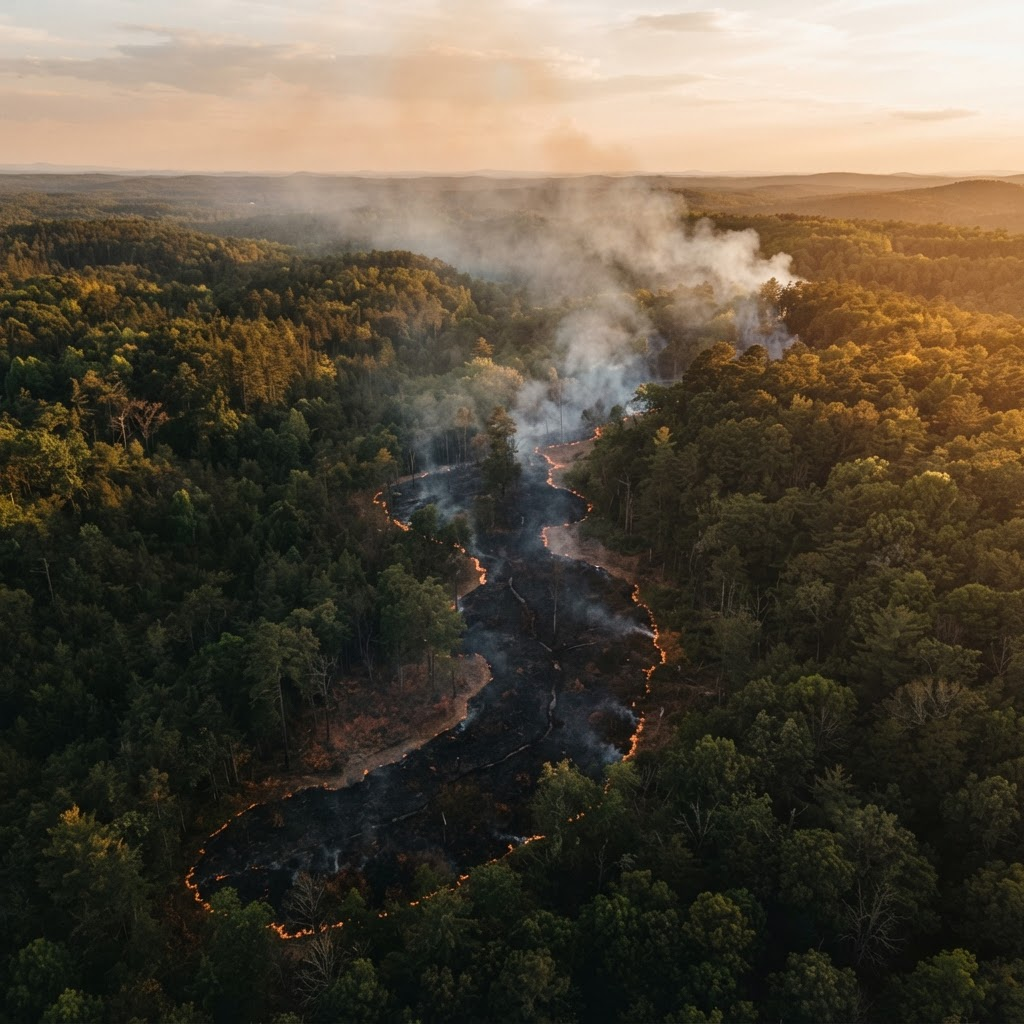
01 / Watch the boundary
Deploy a loose constellation of markers around a planned fire perimeter. When heat crosses the line, each marker becomes a small, undeniable witness.
02 / Inside the marker
The mechanism is deliberately low-tech: a short-lived package of material intelligence, tuned to react only when the fire arrives.
Selected component / 01
A flat, biodegradable casing protects the payload during a short deployment window.
03 / Design the signal
Different terrain demands different confirmation. The marker can be tuned as a visual, acoustic, or machine-readable witness.
Primary signal
A vivid dye or powder cloud makes the moment of boundary escape visible to crews and overhead imaging.
04 / From plan to proof
The promise is not prediction. It is a clearer handoff between a planned line, a changing fire, and the people responsible for both.
Mark the perimeter and record the drop pattern.
Place low-profile markers before ignition.
Heat opens the seal at the boundary.
Crew, camera, and sound agree on the event.
Feed the witness marks into the next plan.
Before field testing